Are flickering kitchen lights, tripping circuit breakers, or plans for a new heat pump or electric vehicle forcing you to examine your breaker box? For many homeowners in the Treasure Valley, upgrading the main service box is one of the most vital investments you can make in home safety and electrical efficiency.
Whether you live in a historic bungalow in the Boise North End with original fuse boxes or a 1980s home on the Boise Bench struggling under the strain of modern appliances, this guide breaks down the true cost of an electrical panel upgrade in Boise, ID. We examine realistic pricing, City of Boise permitting requirements, Idaho Power utility coordination, and when to hire licensed electricians in Boise, ID to ensure flawless execution.
Quick Boise Panel Cost Summary
The average cost to upgrade from an outdated 100-amp box to a modern 200-amp panel in Boise, ID ranges between $1,800 and $3,800. Complex projects involving meter base relocations, underground service trenching, or remediation of hazardous Federal Pacific/Zinsco panels can reach $4,500 or more. Same-day power cutover is standard for licensed electrical contractors.
Average Electrical Panel Upgrade Costs in Boise (2026 Breakdown)
The total cost of your breaker box upgrade depends heavily on your existing electrical capacity, whether utility wires enter overhead or underground, and whether you require additional branch circuits. Below is a realistic price matrix for residential properties in Boise and surrounding Ada County:
| Upgrade Service Type | Average Cost (Boise, ID) | Typical Timeline | Ideal Application |
|---|---|---|---|
| 100A to 200A Panel Upgrade | $1,800 – $3,500 | 6 – 8 Hours | Standard single-family homes adding AC or EV chargers |
| 200A to 400A Service Upgrade | $3,800 – $7,200 | 1 – 2 Days | Large luxury properties, heated pools, workshops & dual EV homes |
| 100A Subpanel Addition | $850 – $1,750 | 3 – 5 Hours | Detached garages, basement finishings & hobby sheds |
| Obsolete Panel Remediation (FPE / Zinsco) | $2,200 – $4,200 | 6 – 9 Hours | Homes built between 1955–1985 requiring urgent fire-hazard removal |
| Meter Socket / Weatherhead Replacement | $900 – $1,900 | 4 – 6 Hours | Storm-damaged overhead service masts & weathered meter bases |
| Panel Relocation (Indoor to Exterior) | $2,800 – $5,400 | 1 – 2 Days | Remodels requiring modern NEC working clearance compliance |
If you are experiencing humming noises, recurring trips, or burning odors around your current box, professional electrical panel repair and replacement is critical to protect your family from structural fire dangers.
Core Factors That Influence Panel Upgrade Costs in Boise
No two electrical systems in the Treasure Valley are completely identical. Several project-specific conditions directly dictate what you will invest in your panel replacement:
1. Amperage Sizing: 100-Amp vs. 200-Amp vs. 400-Amp
Most Boise homes constructed before 1990 were outfitted with 100-amp or even 60-amp electrical services. Today, standard single-family residential code recommends 200 amps to handle central heat pumps, induction ranges, clothes dryers, and electronic equipment simultaneously. Homes over 3,500 square feet or properties featuring multi-bay shop heaters frequently require a 400-amp service split between dual 200A panels.
2. Overhead Service Mast vs. Underground Lateral Feeders
Older Boise neighborhoods like the North End, East End, and Vista Bench frequently receive utility power via overhead lines connected to a roof weatherhead mast. If the existing mast conduit or attachment bracket is weathered, it must be replaced to satisfy Idaho Power attachment standards. In newer subdivisions across West Boise, Meridian, and Eagle, power enters via underground conduits. If heavier-gauge feeder wires must be pulled through utility trenches, material and labor costs rise accordingly.
3. Condition of Branch Wiring and Circuit Breakers
When upgrading a panel, every circuit must be re-landed onto new circuit breakers. If your home has overloaded circuits, damaged neutral bars, or weak breakers, targeted circuit breaker repair and circuit balancing may be required to prevent future nuisance tripping.
4. Knob-and-Tube or Aluminum Wiring Integration
If your Boise property was built before 1950, your attic and crawlspaces may still harbor legacy knob-and-tube conductors. Likewise, homes constructed in the late 1960s and 1970s often feature aluminum branch wiring. Connecting old ungrounded circuits into a modern breaker box requires specialized AFCI (Arc-Fault Circuit Interrupter) protection and COPALUM or AlumiConn pigtail terminations. If your system requires comprehensive conductor upgrades, consider combining your panel installation with electrical wiring and rewiring for complete peace of mind.
Need an Accurate Panel Upgrade Estimate in Boise?
Speak directly with a licensed Master Electrician. We perform comprehensive load calculations, manage City of Boise permits, and coordinate seamlessly with Idaho Power.
Call (208) 990-0029 For A Free QuoteWhy Upgrading to 200 Amps is Essential for Modern Boise Homes
Boise has experienced rapid adoption of clean energy technologies, electric transportation, and whole-home electrification. Here are the primary reasons local homeowners upgrade their electrical service capacity:
- Electric Vehicle Charging: Level 2 EV charging requires a dedicated 240V circuit pulling 32 to 50 continuous amps. Attempting to charge a vehicle on an already maxed-out 100A panel will trip the main breaker. A panel upgrade enables seamless Level 2 EV charger installation right in your Boise garage or driveway.
- Heat Pump and HVAC Conversions: With Idaho summers regularly exceeding 100°F and winters dipping below freezing, modern high-efficiency heat pumps and backup heat strips demand substantial electrical overhead that older panels cannot deliver.
- Kitchen Remodels and High-Draw Appliances: Induction cooktops, double convection ovens, and tankless electric water heaters require substantial dedicated amperage.
- Whole-Home Generator Readiness: If you plan to safeguard your family against seasonal grid interruptions, modern breaker boxes make adding a manual or automatic transfer switch for whole-home generator installation simple and cost-effective.
Urgent Safety Warning: Federal Pacific & Zinsco Panels
If your electrical panel bears the brand name Federal Pacific Electric (FPE) Stab-Lok or Zinsco / GTE Sylvania, replacement is not merely a convenience—it is an urgent fire-prevention necessity.
Insurance Underwriting Advisory in Ada County
Independent consumer safety testing has proven that FPE Stab-Lok breakers fail to trip under direct dead shorts and overloads in up to one out of every four instances. In Zinsco panels, breaker clips frequently weld themselves directly to the aluminum bus bars, allowing runaway current to ignite wall studs. Most major home insurance carriers operating in Idaho will refuse to write a policy on a home with these panels or will demand replacement within 30 days of purchase.
If your panel is sizzling, throwing sparks, or hot to the touch, do not wait. Contact an emergency electrician immediately to isolate power and protect your property.
Permits & Utility Coordination in Boise: What Homeowners Must Know
Replacing an electrical service panel in Idaho is strictly governed by municipal and state regulations. Here is how the regulatory and utility process functions in the City of Boise:
- City of Boise Electrical Permit: An electrical permit must be filed through the City of Boise Planning & Development Services department (or the Idaho Division of Building Safety if your property is located in unincorporated Ada County). Permit fees generally range from $120 to $280 depending on the project valuation.
- Idaho Power Service Order: Electricians submit a formal utility service order to Idaho Power. Idaho Power dispatches a technician on installation morning to pull the glass meter and disconnect high-voltage service from the street.
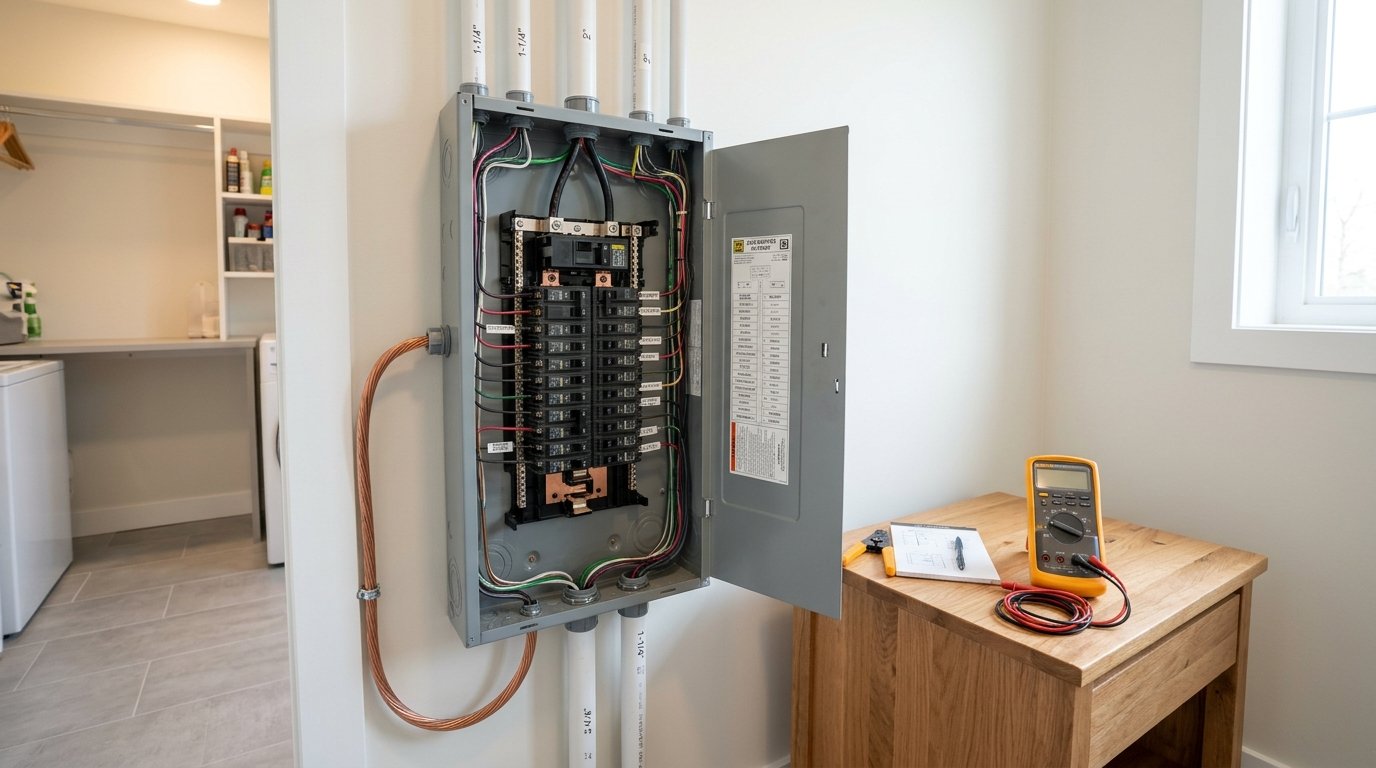
- Panel Installation & Grounding: The electricians remove the old box, install the new NEMA enclosure, insert copper grounding rods driven 8 feet into the earth, bond the water line, wire AFCI/GFCI breakers, and label every branch circuit cleanly.
- City Electrical Rough Inspection: A City of Boise electrical inspector visits the home in the early afternoon to inspect wire gauges, grounding continuity, and working clearances. Upon passing, the inspector places a green clearance tag on the meter base and notifies Idaho Power electronically.
- Same-Day Utility Reconnect: Idaho Power returns that same afternoon (usually before 5:00 PM) to re-insert the meter, seal the glass base, and restore full power to your household.
Frequently Asked Questions About Boise Panel Upgrades
A standard 200-amp panel replacement in Boise costs between $1,800 and $3,800. This includes all hardware, permits, labor, grounding electrodes, whole-home surge suppression, and Idaho Power coordination.
Power is disconnected for roughly 6 to 8 hours. The utility disconnects power at approximately 8:30 AM, electricians work through early afternoon, the city inspection occurs around 2:00 PM, and Idaho Power re-energizes your home before late afternoon.
While Idaho law allows owner-occupants to perform some electrical work on their primary residence, electrical service upgrades involve working directly with lethal utility voltages from the street. Idaho Power and the City of Boise require rigorous technical standards and utility clearance tags that virtually always require a licensed Electrical Contractor to execute safely.
Yes. A 200-amp panel upgrade eliminates major red flags on home inspection reports during real estate transactions. In Boise's competitive housing market, buyers expect properties to be move-in ready for electric vehicle charging and modern electrical appliances.